APPLY
APPLY GIVE
GIVE CHALLENGE


As we celebrate the 60th anniversary of the foundation of Neumann University, we also celebrate 60 years of excellence in the Franciscan tradition. Excellence is one of Neumann’s Core RISES Values. Our broader society often associates excellence with “being the best” or “being better than others.” But what distinguishes excellence in the Franciscan tradition? The example of St. Francis of Assisi teaches us the meaning of Franciscan excellence.
Excellence in the life of St. Francis
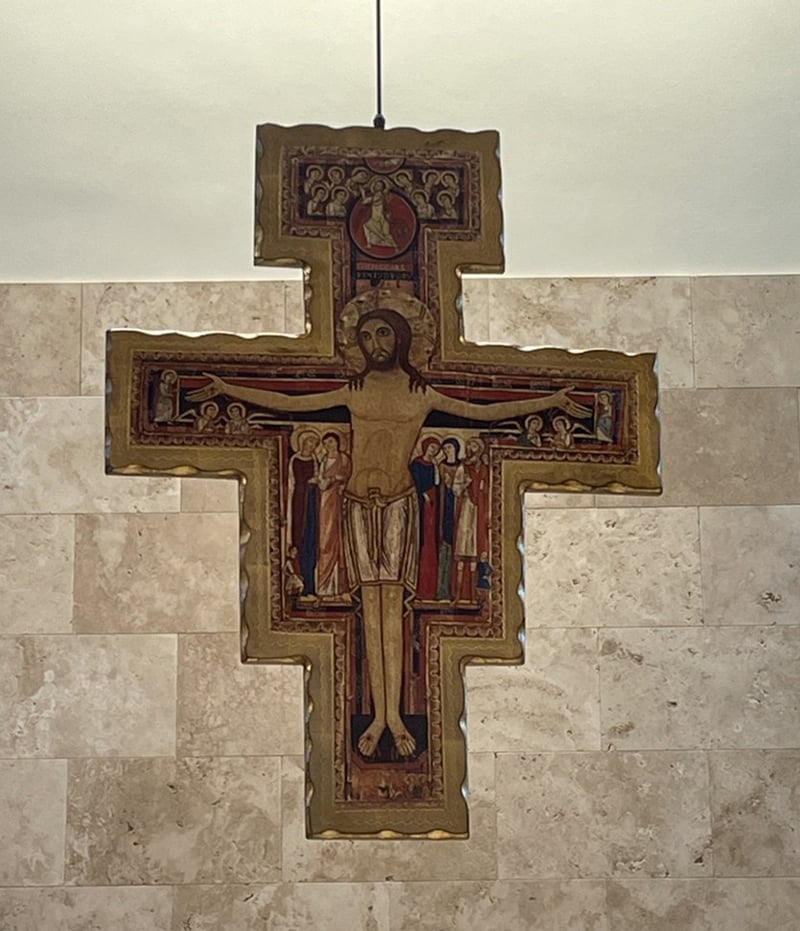
Francis (1181/2 – 1226) came from a family that was part of the merchant class. His father was a cloth merchant, and Francis was expected to follow in his father’s footsteps. Francis’ family had money. When Francis was younger, he was what many would could consider “the life of the party.” He liked the “good life” of nice clothes and comfort. To a large degree, he sought to find meaning in his life by having a good time, by what he possessed, and especially by becoming a knight. Certainly, by becoming a knight he could win the approval and admiration of his family and community. By becoming a knight, he would achieve excellence as defined by society’s standards.
But this was not how Francis would ultimately come to understand excellence for himself. Two events around the time when Francis was 23 or 24 years old greatly shaped Francis’ understanding of how excellence was to be lived: his embrace of the leper and Jesus’ call to him as he prayed before the San Damiano Cross.
Francis’ eventual work among lepers was central to shaping the person he was to become. Francis had been charitable early in his life, but he had drawn the line at helping lepers. Simply put, he found them to be disgusting. Those with leprosy gave off a terrible smell, and Francis went out of his way to avoid them. Francis talks about his change of attitude towards lepers in a work called his Testament. In short, he states that God moved him to have compassion towards lepers and then what had previously been “bitter” for him became a source of great sweetness.
Francis’ outreach to lepers eventually is told as the story of his embrace of one particular leper. We often think about the effect of this encounter on the leper, but it transformed Francis. Francis says that shortly after this experience, he “left the world.” He was going to be different. Where he was going to find meaning and purpose in his life was going to change. He was going to reach outside of his comfort zone to affect the lives of those living on the margins. Rather than finding meaning and purpose in life by becoming a knight and ascending to the heights of power by achieving what society considered excellence, Francis sought to find meaning and purpose in life and to achieve excellence by descending the social ladder and by reaching out in service to the poor and marginalized of his day.
A second pivotal event in the life of Francis was when he heard a call as he was praying in the small Church of Damiano outside the walls of Assisi. Francis had dropped into the church to pray before the cross that was in the church when he heard the voice of Christ tell him, “Francis, go rebuild my house which you can see if falling into disrepair.” While Francis initially began to rebuild the physical church in which he found himself, he eventually went on to rebuild the broader church and the world around him. Francis sought excellence by seeking to change the world for the better.
Modeled on the life of St. Francis, Franciscan excellence involves using our gifts in loving service to others (especially those on the margins) and following the call to rebuild the world around us.
Franciscan Excellence at Neumann University
The Neumann University community has lived out the Franciscan vision of excellence since its founding 60 years ago. The Sisters of St. Francis of Philadelphia have been models of Franciscan excellence. Their founding of the College of Our Lady of Angels reflected their selfless service as they sought to provide a college education to underserved communities and to, thereby, reshape the world around them. In their sponsorship of the University and through their ministries on campus, the sisters continue to exemplify Franciscan excellence.
Neumann’ RISES values flow from the lived faith of the sisters. In its explanation of the RISES values, the University explains that excellence involves “perform[ing] to the best of our ability the responsibilities entrusted to us.” The entire Neumann community—sisters, administration, staff, faculty, students, and alumni—seek to live this commitment.
For example, Neumann students “perform to the best of their abilities” academically, athletically, and artistically. Neumann students excel in their academic disciplines. For example, 96.23% of graduating nursing students passed the NCLEX-RN exam on their first attempt in 2025. Neumann athletes strive for excellence as traditionally understood in their competitions, and they have been very successful in these endeavors. For example, recently the men’s soccer and men’s basketball teams won Atlantic East titles, and the roller hockey squad won its sixth national championship. Artistically, Neumann students have also offered their best performances in their theater productions, such as the recent production of Frankenstein, in their musical performances, such as the recent “Sounds Like Fun” jazz band concert, and through other forms of visual arts.
Our students’ academic, athletic, and artistic excellence does not end with these accomplishments, however. They have embraced the deeper meaning of Franciscan excellence.
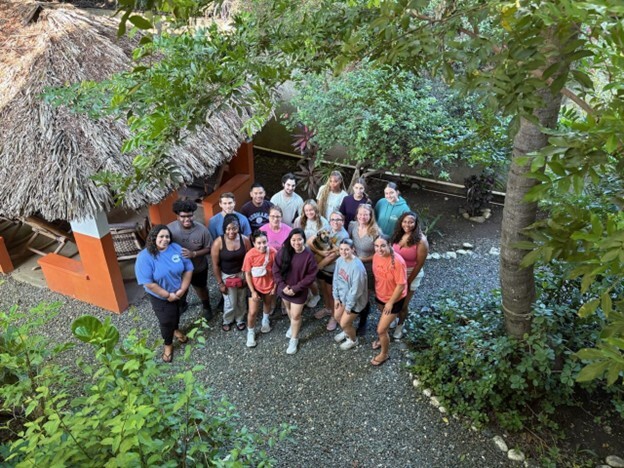
Operating from the principle that “knowledge is a gift to be shared in the service of others” (from Neumann’s Mission Statement), students pursue excellence not only in the classroom but by using the knowledge that they have gained to rebuild the world around them. For example, in October nursing students traveled to the Dominican Republic where they held pop-up clinics deep in the countryside. Students in Neumann’s doctoral program in therapy practice their skills in a clinic for the sisters in the Convent of Our Lady of Angels.
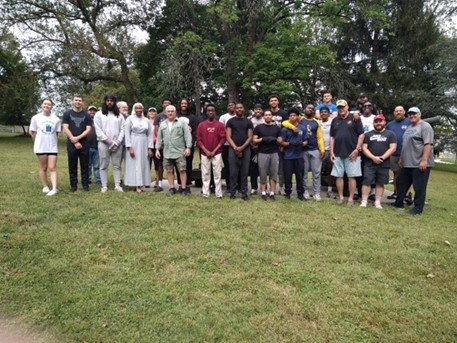
Student athletes also move beyond excellence on the court or on the field to working for the betterment of the world. For example, members of the men’s basketball team ---and other students, faculty members, and staff members--recently joined together to clean up the grounds at the Marine Corps League in Upland, PA.
For their part, student artists have served to transform the world by sharing the beauty of the arts. For example, the jazz band has performed for the sisters in the Convent of Our Lady of Angels and student artists have donated their time to create a mural in the Bachmann Hall studio classroom.
Examples of loving service performed by Neumann students go on and on. Simply put, our students are exemplifying the true meaning of Franciscan excellence by reaching out in service to others and by working to reshape the world around them.
Neumann’s Commitment to Franciscan Excellence during the 60th Anniversary Celebration
Replicas of the San Damiano Cross hang in the Sacred Heart Chapel and in most rooms on campus. These crosses remind the Neumann community of Jesus’ call to renew the world around us through loving service to God’s people. One of the most profound ways the Neumann community has celebrated 60 years of Franciscan excellence is through its campaign to complete 60,000 hours of service. This campaign began on Charter Day, 2025, when members of the Neumann gathered to pack 30,000 meals for Kids against Hunger. The Neumann community (sisters, administration, faculty, staff, students, alumni, and friends) continues to strive for Franciscan excellence through this campaign. Join us in rebuilding the world around us by logging your service hours at Microsoft Forms so that we can reach our service goal by March 2026.