APPLY
APPLY GIVE
GIVE CHALLENGE


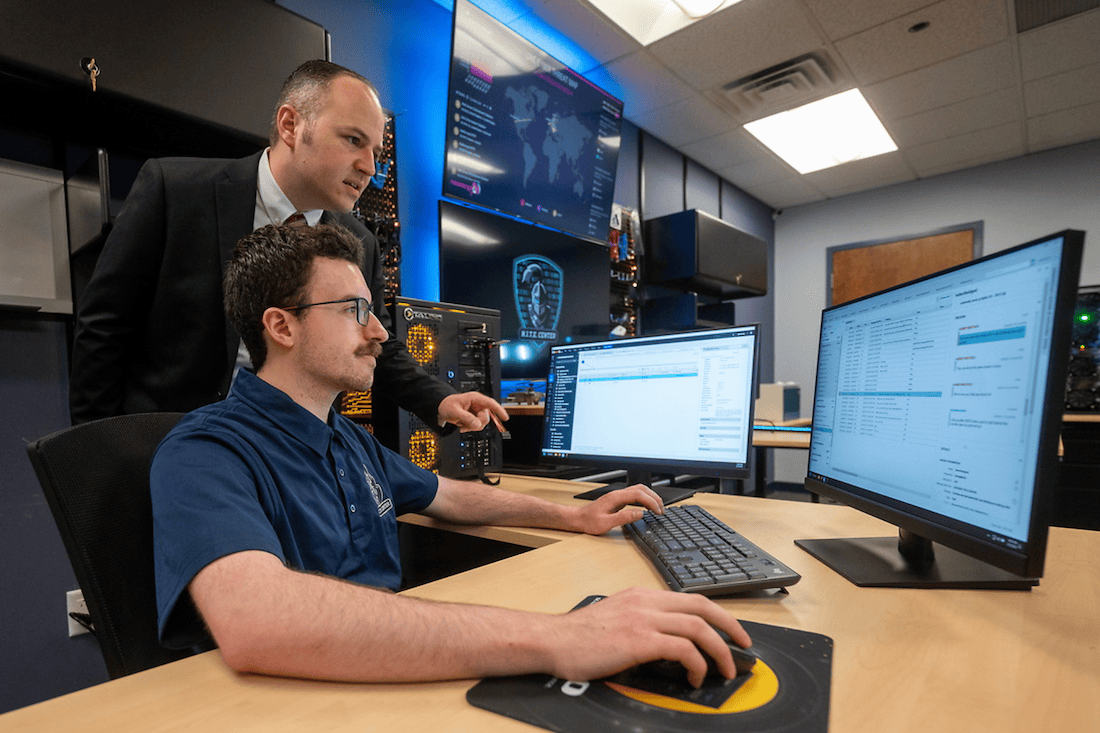
This article examines the role of the modern cybersecurity professional while demonstrating how Neumann University's Master of Science in Cybersecurity and Forensics provides a structured opportunity for students to develop practical skills in cybersecurity, digital forensics, incident response, and AI-driven security challenges.
Cybersecurity Professionals Help Protect More Than Just Computers
Cybersecurity protects individuals, businesses, schools, healthcare systems, and governments by securing financial information, personal accounts, health records, and digital identities. Professionals also safeguard business operations, communications, customer data, and internal networks to help organizations maintain trust, continuity, and resilience against evolving cyber threats.
What Do Cybersecurity Professionals Do?
Cybersecurity professionals protect digital environments by preventing attacks, responding to security incidents, and helping organizations strengthen their defenses over time. Their responsibilities combine technical expertise, problem-solving, and investigation to secure data, systems, and networks while reducing risk and supporting the people and organizations that rely on connected technology every day.
They Identify Risks Before Attackers Can Exploit Them
A major part of cybersecurity involves finding and addressing weaknesses before criminals can take advantage of them. Professionals monitor networks, evaluate system vulnerabilities, review security controls, and recommend improvements that reduce risk. This proactive approach helps prevent disruptions and protect sensitive information while helping organizations operate securely.
They Respond When Threats and Breaches Occur
When attacks happen, cybersecurity professionals are responsible for:
- Detecting the attack
- Containing the damage
- Investigating what occurred by analyzing digital evidence and determining how the system was compromised
- Support recovery efforts by helping to restore secure operations
Neumann University's online master's in cybersecurity and forensics is designed to help students build practical skills in digital forensics, incident response, breach investigation, and evidence collection for real-world cybersecurity challenges.
Cybersecurity Work Shows up in Everyday Contexts
According to a report from the U.S. Congress, cyber incidents continue to expand with respect to frequency, impact, and type. The FBI's 2024 Internet Crime Report reflected a total of 859,532 reports of internet crime and losses exceeding $16 billion (a 33% increase compared to 2023).
As you may suspect, due to the staggering data, cybersecurity is not limited to technical environments; it impacts how people use digital tools at home, work, and in public systems. Plus, cybersecurity risks differ depending on whether the target is an individual or an organization.
Individuals Face Threats Like Fraud, Identity Theft, and Account Compromise
Cybersecurity professionals help individuals stay safe from threats such as:
- Phishing
- Stolen passwords
- Identity theft
- Financial fraud
- Account compromise
Attacks like these often target email, banking, social media, and messaging platforms. Cybersecurity professionals work to strengthen security systems, readily detect suspicious activity, and promote safer behavior to reduce the risk of personal data loss and financial harm across personal devices.
Organizations Face Threats to Data, Networks, and Operations
Organizations face constant cyber threats that can disrupt operations, expose sensitive data, and damage trust. Cybersecurity professionals defend against:
- Ransomware attacks
- Data breaches
- Outages
- Unauthorized access to internal networks
They are responsible for securing communication, monitoring infrastructure, and strengthening defenses to ensure that businesses and institutions can continue operating safely while protecting customer and organizational information across critical systems.
Protecting Infrastructure Is a Major Part of the Job
A significant portion of cybersecurity work focuses on keeping the underlying systems that power modern life secure, reliable, and continuously available across interconnected digital environments.
Cybersecurity Professionals Help Defend Networks and Digital Environments
Cybersecurity professionals secure the infrastructure on which organizations depend, including:
- Networks
- Servers
- Cloud platforms
- Endpoints
- Communication systems
They configure protections, monitor traffic, and manage access controls to reduce exposure to attacks. Their work ensures that digital environments remain stable and resilient, allowing organizations to operate securely across distributed systems and increasingly complex technology stacks.
Security Has to Be Built Into Operations, Not Added Later
Modern cybersecurity is integrated into everyday operations, rather than treated as an afterthought. Professionals help design systems with security in mind from the start, embedding safeguards into workflows, software deployment, and infrastructure management.
This proactive approach improves reliability and continuity, ensuring organizations can maintain services, adapt to change, and reduce disruption from evolving cyber threats.
Cybersecurity Professionals Need to Think Like Attackers
To defend systems effectively, cybersecurity professionals must understand how attackers operate, including the methods, motivations, and technical strategies used to find and exploit weaknesses in digital environments.
Understanding Threats Helps Strengthen Defenses
Cybersecurity professionals study attacker behavior to anticipate how systems might be targeted. This includes analyzing common intrusion techniques, malware patterns, and the exploitation of software or configuration weaknesses. A cybersecurity professional puts themselves in the attacker's mindset to think through how an attack could unfold. They can then design stronger defenses, close security gaps, and improve system resilience before real-world threats occur.
Ethical Hacking and Penetration Testing Support Prevention
Ethical hacking allows professionals to simulate real attacks in controlled environments to uncover vulnerabilities before criminals. Penetration testing plays a key role in this process by identifying weaknesses in networks, applications, and systems.
Neumann University's master's in cybersecurity and forensics emphasizes advanced penetration testing, training students to think like attackers to proactively strengthen defenses and improve organizational security.
Digital Forensics and Incident Response Are Part of Protecting People and Organizations
When cyber incidents occur, professionals step in to investigate, analyze evidence, and guide recovery efforts that help restore secure operations and understand what went wrong.
Some Cybersecurity Work Happens After an Attack
After a breach or cyberattack, cybersecurity professionals focus on uncovering how the incident occurred. This involves:
- Investigating compromised systems
- Preserving digital evidence
- Tracing attacker activity across networks
Digital forensics helps reconstruct events in detail to ensure an accurate understanding of the breach while maintaining evidence integrity for reporting, compliance, and potential legal proceedings.
This Work Helps Organizations Recover and Improve
Incident response and forensic analysis don't just reveal and resolve immediate damage; they strengthen future defenses. Professionals identify the vulnerabilities, misconfigurations, or process failures that enabled the attack. Based on these findings, they recommend improvements to systems and policies, helping organizations reduce repeat risks, improve detection capabilities, and implement more resilient security practices.
Cybersecurity Is an Ethical Responsibility
Ethical decision-making is central to cybersecurity practice, especially as professionals navigate high-stakes digital environments. Our program emphasizes responsible conduct alongside technical training.
Security Decisions Affect Real People
Cybersecurity professionals make choices that directly influence privacy, access to services, safety, and institutional trust. Decisions about monitoring systems, handling data, and responding to incidents can impact individuals and communities.
Balancing protection with respect for rights and confidentiality requires careful judgment, ensuring that security measures do not unintentionally harm those they are designed to protect.
Ethical Judgment Matters as Technology Changes
As technology evolves, cybersecurity professionals must continuously adapt their ethical reasoning to new challenges, including AI-driven attacks, automated surveillance, and advanced data exploitation techniques.
Responsible practice involves evaluating not only what can be done technically, but what should be done. Strong ethical judgment ensures defenses remain effective while respecting legal, professional, and societal standards.
The Field Requires Both Practical Skill and Critical Thinking
Graduate-level cybersecurity training deepens technical knowledge and provides the opportunity for students to strengthen their ability to analyze complex problems, respond under pressure, and apply judgment in dynamic, realistic security environments.
Cybersecurity Involves More Than Technical Tools Alone
In addition to using tools to interpret risks, evaluate threats, and make informed decisions in unpredictable situations, cybersecurity professionals analyze system behavior, prioritize incidents, and adapt strategies as conditions change. Critical thinking is essential, as it allows them to connect technical signals to real-world implications and choose responses that effectively reduce risk and maintain system integrity.
Hands-on Practice Helps Build Real Readiness
Practical training is essential for developing cybersecurity readiness. Our program emphasizes hands-on experience through experiential learning opportunities, such as:
- Hacking lab simulations
- Applied exercises
- Work with current-generation IT hardware
These experiences provide students with the opportunity to practice identifying vulnerabilities, responding to incidents, and applying defensive strategies in realistic scenarios that mirror professional cybersecurity challenges.
Why This Work Matters More Than Ever
As society becomes increasingly dependent on digitally connected systems, cybersecurity has shifted from a specialized field to a foundational requirement for maintaining trust, stability, and continuity across daily digital interactions.
Individuals and Organizations Both Depend on Digital Trust
Modern life relies on secure digital systems for communication, banking, healthcare, education, and business operations. This dependence makes cybersecurity professionals essential for maintaining trust in these systems. When security fails, the effects can disrupt services, compromise data, and erode confidence. Cybersecurity work ensures that individuals and organizations can rely on technology safely and consistently.
Protecting Systems Also Means Protecting People
Cybersecurity is ultimately about more than technology; it directly affects human safety, access to essential services, and organizational continuity. When systems are secure, people can communicate, work, and receive care without disruption or fear of exploitation. Protecting infrastructure and data helps maintain stability in everyday life, ensuring that digital systems support (rather than endanger) the people who depend on them.
Explore the Skills Behind Modern Cybersecurity Protection
Cybersecurity professionals safeguard individuals, organizations, and critical systems through technical skill, ethical judgment, and real-world problem-solving. Neumann University's online Master of Science in Cybersecurity and Forensics provides students with the opportunity to practice managing these responsibilities with hands-on training in digital forensics, incident response, and advanced security practices. Advanced experiential training helps students emerge equipped to protect and strengthen today's interconnected digital world.
To learn more, we invite you to explore the program or request additional information.